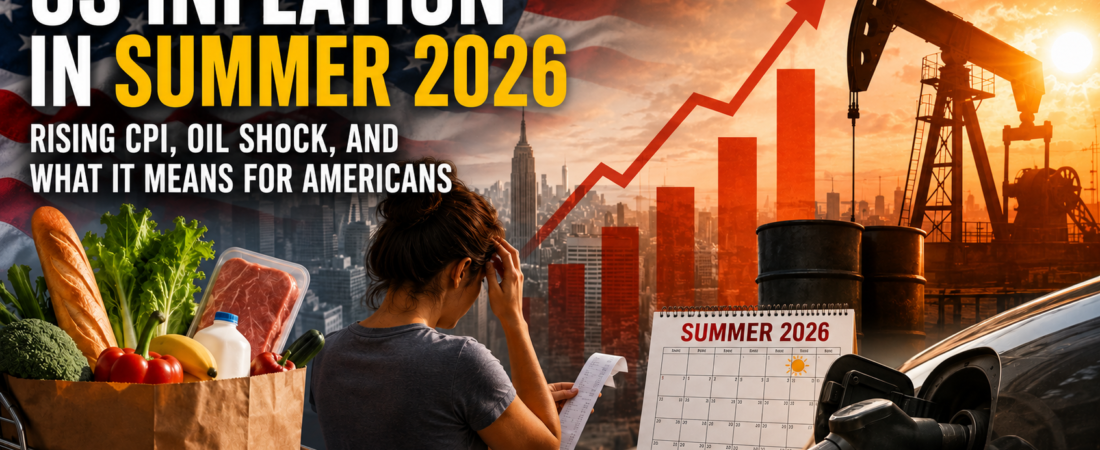
In summer 2026, inflation in the United States is rising again, marking a notable shift from the gradual decline that had been expected throughout the year. The annual inflation rate as of April 2026 reached 3.8%, the highest level since May 2023, up from 3.3% in March.
This acceleration is driven by an oil shock, persistent energy costs, shelter inflation, and food price increases that are affecting households across the country.
US Inflation Rate April 2026: Key Numbers
| Category | April 2026 | March 2026 | Key Change |
|---|---|---|---|
| Headline CPI (YoY) | 3.8% | 3.3% | Highest since May 2023 |
| Monthly CPI change | +0.6% | +0.9% | Easing from March’s surge |
| Core CPI (YoY) | 2.8% | 2.6% | Highest since September 2025 |
| Core CPI (monthly) | +0.4% | +0.2% | Above forecasts of 0.3% |
| Energy costs (YoY) | +17.9% | +12.5% | Steepest since Sept 2022 |
| Gasoline (YoY) | +28.4% | +18.9% | Major driver of overall inflation |
| Fuel oil (YoY) | +54.3% | — | Sharp increase in home energy |
| Shelter inflation (YoY) | +3.3% | +3.0% | Rent and housing costs rising |
| Food inflation (YoY) | +2.3% | +2.7% | Slight moderation but still elevated |
All figures are year-over-year changes unless otherwise noted. Source: U.S. Bureau of Labor Statistics.
Why US Inflation Is Rising in Summer 2026
1. Oil Shock from Iran Conflict
The inflation spike in April 2026 is primarily driven by an oil shock triggered by the war with Iran. This has pushed energy prices sharply higher, affecting gasoline, fuel oil, and transportation costs across the U.S. economy.
Energy costs jumped 17.9% year-over-year, the steepest annual increase since September 2022, and far above the 12.5% increase seen in March.
Gasoline prices alone rose 28.4%, while fuel oil increased by 54.3%, directly impacting household budgets and production costs for businesses.
2. Tariff Pass-Through Effects
Experts warn that tariffs introduced in 2025 are now showing delayed effects on consumer prices. By mid-2026, many companies are passing import costs to consumers after depleting pre-tariff inventories, contributing to price increases in goods and materials.
3. Shelter and Housing Costs
Housing inflation remains a major driver. Shelter inflation accelerated to 3.3% year-over-year, up from 3.0% in March, reflecting continued rent increases and high home prices that consume a larger share of household income.
Even when overall inflation slows, shelter costs tend to stay elevated for years, making housing a persistent burden on budgets.
4. Food Price Pressures
While food inflation slowed slightly to 2.3% from 2.7% in March, prices for food remain high compared to pre-pandemic levels. Food accounts for 14% of the CPI basket, so even modest increases affect the overall inflation rate.
5. Core Inflation Staying Elevated
Core inflation, which excludes volatile food and energy prices, is also rising. At 2.8% year-over-year, it is the highest level since September 2025, and above the Federal Reserve’s forecasts of 2.7%.
This suggests that underlying price pressures remain sticky, not just temporary energy spikes.
What Rising US Inflation Means for American Consumers
Higher Gas and Fuel Bills
American households are facing significantly higher costs for:
- Gasoline for daily commutes
- Fuel oil for home heating
- Electricity linked to energy markets
- Transportation costs for goods and services
For drivers, the 28.4% increase in gasoline prices means filling up the tank costs nearly a third more than a year ago.
Rent and Housing Costs
With shelter inflation at 3.3%, renters are facing higher lease renewals and landlords are passing on increased costs like property taxes and maintenance. Homeowners with variable-rate mortgages may also face higher payments if interest rates remain elevated.
Groceries and Household Essentials
Food at 2.3% inflation means families are paying more for staples. While this is lower than energy inflation, it still adds up across a month of grocery shopping.
Overall Cost of Living
With headline inflation at 3.8%, the average American household is paying significantly more for the same basket of goods and services compared to a year ago. This erodes purchasing power, especially for those on fixed incomes or with stagnant wages.
What the Federal Reserve Is Watching in 2026
The Federal Reserve’s main inflation target is 2% for core PCE (Personal Consumption Expenditures). By late 2025, core PCE was already around 3%, a full percentage point above target and trending upward.
Key concerns for the Fed in summer 2026:
- Core inflation trending higher instead of falling toward 2%
- Energy shocks pushing headline inflation up
- Tariff pass-through adding to goods prices
- Strong economic growth (over 4% annualized GDP) reducing pressure to cut rates
- Steady labor market reducing urgency for rate cuts
As a result, the Fed is likely to keep interest rates higher for longer, delaying cuts that households might be hoping for. This means:
- Mortgage rates stay elevated
- Auto loan rates remain high
- Credit card rates stay expensive
- Savings yields may be higher but borrowing costs remain punitive
Forecast for US Inflation: Rest of Summer 2026
The outlook for inflation in the coming months depends heavily on:
- Oil prices: If the Iran conflict continues, energy prices could remain elevated or rise further.
- Tariff policy: Any new tariffs or trade restrictions could add more price pressure.
- Fed response: If inflation stays high, the Fed may hold rates steady or even raise them further.
- Economic growth: Strong GDP growth (over 4%) suggests the economy is not in recession, reducing urgency for rate cuts.
Forecasts have shifted from expecting gradual decline to 2% to a more uncertain outlook where inflation could surprise to the upside, potentially exceeding 4% by end of 2026.
Practical Tips for Americans Dealing with US Inflation in 2026
Given the rising cost of living and inflation pressures, here are actions that can help:
1. Reduce Energy Consumption
- Turn off lights and electronics when not in use
- Use programmable thermostats to reduce heating/cooling costs
- Drive less when possible (carpool, public transit, trip chaining)
- Check for energy efficiency rebates or programs
2. Budget for Higher Bills
- Review and adjust your budget for higher gas, rent, and food costs
- Prioritize essentials: housing, food, utilities, transportation
- Cut discretionary spending on subscriptions and entertainment
3. Shop Strategically for Groceries
- Buy generic brands instead of name brands
- Use coupons and loyalty programs
- Plan meals around sales and seasonal produce
- Buy in bulk for non-perishables when on sale
4. Lock in Fixed Costs If Possible
- Consider refinancing if you have a variable-rate mortgage and rates might rise
- Lock in utility rates where available
- Shop for better insurance rates annually
5. Build or Maintain an Emergency Fund
Even a small savings buffer helps avoid debt when unexpected expenses arise. With inflation eroding purchasing power, an emergency fund is more important than ever.
6. Track Your Personal Inflation Rate
Your personal inflation rate may be higher or lower than the national average, depending on your spending pattern. Track your monthly expenses to see how inflation is affecting your household specifically.
Bottom Line: US Inflation in Summer 2026
Inflation in the U.S. is not subsiding — it is heating up again in summer 2026.
The combination of:
- Oil shock from Iran conflict
- Tariff pass-through effects
- Persistent shelter inflation
- Elevated core inflation
means that households are facing higher prices across the board. The Federal Reserve is unlikely to cut rates soon, and inflation could surprise to the upside, potentially exceeding 4% by the end of 2026.
For consumers, the key is to manage spending carefully, reduce energy costs where possible, and prepare for a new normal where essential costs remain elevated.