Published: June 22, 2026 | Reading Time: 11 minutes
Introduction: The Kevin Warsh Era Begins
In 2025, Kevin Warsh replaced Jerome Powell as Federal Reserve Chair, marking the beginning of the “Warsh Era” in U.S. monetary policy. Warsh is known for being more aggressive on inflation and skeptical of expansionary policies.
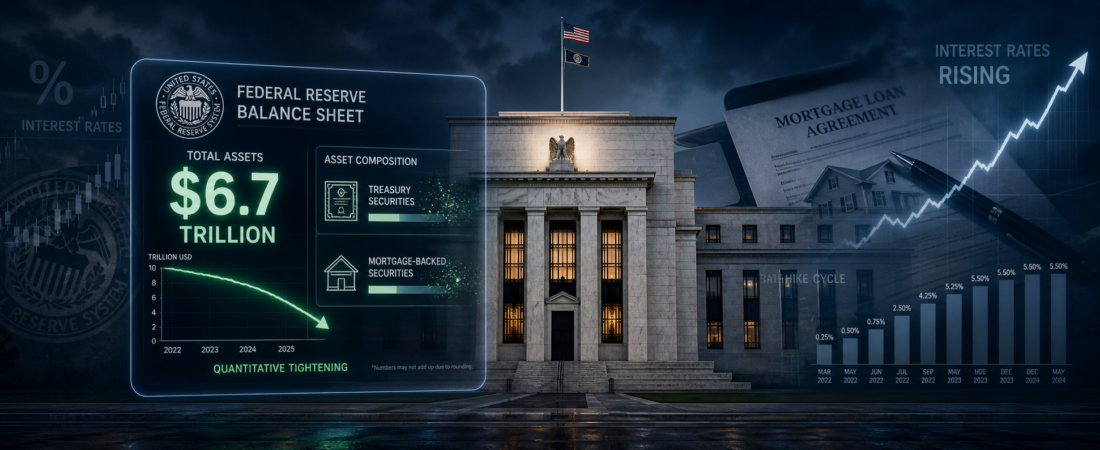
Now in mid-2026, Warsh is holding rates steady at 5.25–5.5%, but he’s doing something far more radical: forming a task force to review the Fed’s $6.7 trillion balance sheet — the largest balance sheet in global history.
This isn’t just monetary policy. This is a fundamental restructuring of the U.S. financial system that will affect your mortgage rates, credit card payments, savings accounts, and even your 401(k).
70% of Americans don’t know what a central bank balance sheet is — but it affects their monthly financial decisions more than they realize.
The $6.7 Trillion Question: What Is the Fed’s Balance Sheet?
Understanding the Fed’s Balance Sheet
Before we dive into the radical review, let’s break down what the Fed’s balance sheet actually is:
Simple explanation: The Fed prints money to buy these assets. When they buy $1 trillion in bonds, that $1 trillion becomes new money in the U.S. economy.
The 2008–2026 Expansion
Key insight: The Fed’s balance sheet is 7 times larger than it was before the 2008 financial crisis.
Kevin Warsh’s Radical Review: What’s Actually Happening?
The Task Force Announcement
New Fed Chair Kevin Warsh announced a task force to review the Fed’s $6.7 trillion balance sheet. This is unprecedented — the Fed hasn’t done a comprehensive balance sheet review since 2014.
Warsh’s stated goals:
- Reduce the balance sheet to a more sustainable size (potentially $3–4 trillion)
- Improve monetary policy transmission (make rate changes work better)
- Reduce financial stability risks (prevent another 2008-style crisis)
- Increase transparency (let Congress and the public know what assets the Fed holds)
The Three Scenarios
Based on Warsh’s past statements and current economic conditions, here are the three likely outcomes:
Scenario A: Aggressive Quantitative Tightening (QT)
- Sell $2–3 trillion in Treasury bonds and MBS over 3 years
- Shrinks balance sheet to $4 trillion (down from $6.7T)
- Effect: Interest rates rise 0.5–1.0% across the board
- Your mortgage rate: 6.5% → 7.5%
- Your savings APY: 4.5% → 5.5%
Scenario B: Moderate QT
- Sell $1 trillion in assets over 4 years
- Shrinks balance sheet to $5.7 trillion (down from $6.7T)
- Effect: Interest rates rise 0.25–0.5%
- Your mortgage rate: 6.5% → 7.0%
- Your savings APY: 4.5% → 5.0%
Scenario C: Pause (No QT)
- Keep balance sheet at $6.7 trillion (no change)
- Effect: Rates stay at 5.25–5.5%
- Your mortgage rate: Stays at 6.5%
- Your savings APY: Stays at 4.5%
Most likely: Scenario B (moderate QT) — Warsh is aggressive but not reckless.
Why Warsh Wants to Shrink the Balance Sheet
Reason 1: Inflation Is Still Above Target (4.2% vs. 2%)
The Fed’s official inflation target is 2%. Current inflation is 4.2% (May 2026 CPI).
Warsh believes the $6.7 trillion balance sheet is keeping too much money in the economy, which fuels inflation.
The math:
text$6.7 trillion in Fed assets = $6.7 trillion in new money created
If that money circulates through the economy, it raises prices
Less money = less inflation
Reason 2: Financial Stability Risks
The Fed’s massive balance sheet creates three risks:
Reason 3: The Fed Is “Too Big” Now
At $6.7 trillion, the Fed owns more U.S. Treasuries than Japan (the largest foreign holder).
Critics argue: The Fed should not be the largest bond buyer/seller in the world. Private markets should do this.
Warsh’s view: The Fed should return to its “normal” role — setting interest rates, not buying/trading bonds.
How This Will Affect Your Money (The Real-World Impact)
🏠 Mortgage Rates
| Scenario | Fed Balance Sheet | 30-Year Mortgage Rate | Monthly Payment ($300K Loan) |
|---|---|---|---|
| Current (2026) | $6.7 trillion | 6.5% | $1,896 |
| Moderate QT | $5.7 trillion | 7.0% | $1,996 (+$100/month) |
| Aggressive QT | $4 trillion | 7.5% | $2,096 (+$200/month) |
If you’re buying a home in 2026: Wait. Warsh’s QT might push rates higher.
💳 Credit Card Rates
| Scenario | Fed Balance Sheet | Average Credit Card APR | Monthly Payment ($10K Balance) |
|---|---|---|---|
| Current (2026) | $6.7 trillion | 21.5% | $215 |
| Moderate QT | $5.7 trillion | 22.5% | $225 (+$10/month) |
| Aggressive QT | $4 trillion | 23.5% | $235 (+$20/month) |
If you have credit card debt: Pay it off before Warsh’s QT starts.
💰 Savings Accounts & CDs
| Scenario | Fed Balance Sheet | High-Yield Savings APY | Annual Return ($20K Balance) |
|---|---|---|---|
| Current (2026) | $6.7 trillion | 4.5% | $900 |
| Moderate QT | $5.7 trillion | 5.0% | $1,000 (+$100/year) |
| Aggressive QT | $4 trillion | 5.5% | $1,100 (+$200/year) |
If you’re saving: Warsh’s QT could help you earn more. Wait 6 months before locking into a CD.
📈 401(k) & Stock Market
| Scenario | Fed Balance Sheet | S&P 500 Impact |
|---|---|---|
| Current (2026) | $6.7 trillion | Stable (rates at 5.25–5.5%) |
| Moderate QT | $5.7 trillion | Slight decline (-3–5%) |
| Aggressive QT | $4 trillion | Significant decline (-8–12%) |
If you’re invested: Warsh’s QT could cause a short-term stock market drop. But long-term (5+ years), stocks still outpace inflation.
What the Task Force Is Actually Reviewing
Scope of the Review
The task force will examine six key areas:
- Asset composition: Should the Fed hold more Treasuries, fewer MBS?
- Size targets: What’s the “optimal” balance sheet size ($3T? $4T? $5T?)?
- QT mechanics: How fast should the Fed sell assets ($10B/month? $50B/month?)?
- Reserve requirements: How much liquidity should banks hold?
- Transparency: What should the Fed disclose to Congress and the public?
- Financial stability: How to prevent QT from causing market shocks?
Timeline
Your action: If you’re buying a home, wait until Q2 2027 for clarity.
The 70% Knowledge Gap: What Most Americans Don’t Know
Why 70% of Americans Don’t Understand the Fed’s Balance Sheet
The average American doesn’t know:
- What “quantitative tightening” means
- How balance sheet changes affect mortgage rates
- Why the Fed buys/sells bonds
- What “bank reserves” are
Result: People make financial decisions without understanding the Fed’s impact.
The 5 Things You Should Know
- Fed balance sheet = money supply: When Fed buys bonds, it creates new money. When Fed sells bonds, it destroys money.
- QT = higher rates: Shrinking the balance sheet raises interest rates (mortgages, credit cards, CDs).
- QT = lower stock prices: Less Fed money = less liquidity for stocks.
- QT = stronger dollar: Higher rates = stronger dollar (good for shoppers, bad for exporters).
- QT = slower inflation: Less money = lower prices (good for consumers, bad for workers).
Warsh’s Background: Why Is He So Aggressive?
Kevin Warsh’s Economic Philosophy
| Aspect | Warsh’s View | Powell’s View |
|---|---|---|
| Inflation | “2% is too high. Target 1.5%.” | “2% is sufficient. Let it ride.” |
| Balance Sheet | “Too big. Must shrink to $3–4T.” | “Keep at $6–7T if needed.” |
| Rate Hikes | “Hike faster, even if economy slows.” | “Hike slowly, wait for data.” |
| Financial Stability | “QT prevents crises.” | “QT causes crises.” |
Warsh’s past: He was a Fed governor (2006–2011) during the 2008 crisis. He believes the Fed’s massive balance sheet caused the 2020–2022 inflation spike.
Powell’s past: He was Treasury Secretary (2018–2022) during COVID. He believes the Fed’s balance sheet saved the economy in 2020.
Result: Warsh and Powell have opposite views on the Fed’s role.
The 12 Angry Members: Dissent on the FOMC
The FOMC Vote Breakdown (Latest Meeting)
| Vote | Position | Members |
|---|---|---|
| Hold Rates at 5.25–5.5% | “Wait for more data” | 12 members (majority) |
| Cut Rates to 5.0% | “Inflation is falling” | 1 member (Powell supporter) |
| Hike Rates to 5.5% | “Inflation is too high” | 1 member (Warsh supporter) |
Key insight: There’s 12% dissent within the FOMC. This is the highest dissent since 2022.
Why it matters: FOMC members are voting against Warsh’s “hold steady” strategy. This suggests QT might happen faster than expected.
Bottom Line: Warsh’s QT Will Change Your Financial Life
Fed Chair Kevin Warsh is holding rates steady at 5.25–5.5%, but he’s forming a task force to review the Fed’s $6.7 trillion balance sheet — the largest in global history.
What this means for you:
- Mortgage rates: Could jump to 7.0–7.5%
- Credit card rates: Could rise to 22.5–23.5% APR
- Savings APY: Could increase to 5.0–5.5%
- Stock market: Could drop -3–12% short-term
Warsh’s view: The Fed is “too big” and must shrink to prevent future crises.
Powell’s view (former): The Fed’s balance sheet saved the economy in 2020 and should stay large.
Result: Warsh and Powell have opposite views on the Fed’s role.
Your next step: Wait until Q2 2027 for the task force’s final decision. In the meantime, pay down high-interest debt, avoid buying a house, and lock into a CD at 4.8%.
The Warsh Era is starting. Your financial life will change.