June 2026 · 8 min read
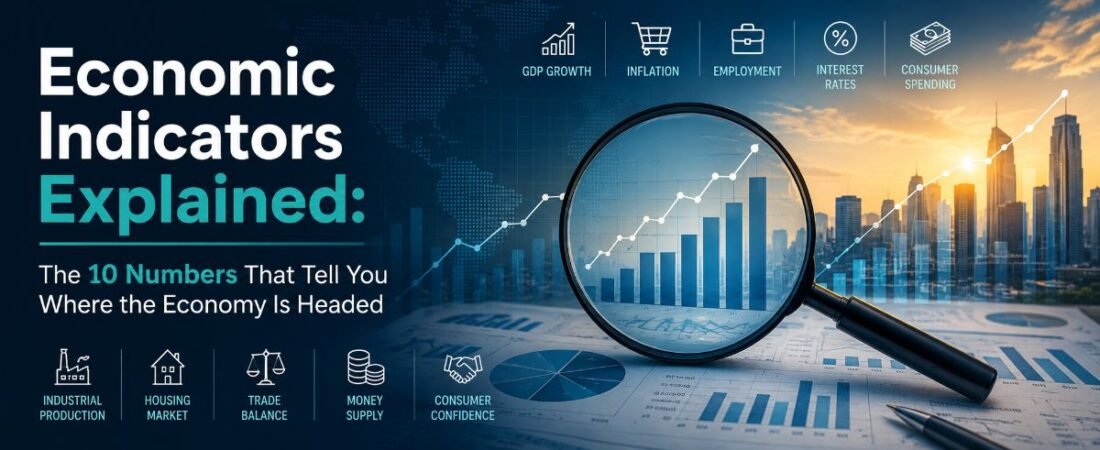
Economic indicators are some of the most important numbers in economics because they show whether the economy is growing, slowing down, or running into trouble. If you want to understand economic indicators, key economic indicators, and the major signals that shape the financial outlook, this guide breaks them down in a simple and readable way.
What are economic indicators?
Economic indicators are statistics that measure the health of the economy. They help analysts, investors, policymakers, and business owners understand what is happening with growth, prices, jobs, spending, and confidence. In other words, economic indicators are the data points that show whether the economy is expanding or weakening.
When people search for what are economic indicators or economic indicators meaning, they are usually looking for a simple explanation. The short answer is this: economic indicators are the numbers that help tell the story of the economy.
Why economic indicators matter
Economic indicators matter because they affect almost everything. They influence interest rates, mortgage costs, hiring decisions, consumer spending, and business investment. They also help explain why the economy feels strong in one month and weaker the next.
They are especially useful because they can signal changes before those changes show up everywhere else. That is why economists pay close attention to leading economic indicators and not just the latest headline GDP number.
The main types of economic indicators
There are three main types of economic indicators.
- Leading indicators suggest where the economy may go next.
- Coincident indicators move with the economy in real time.
- Lagging indicators confirm trends after they have already happened.
This structure is important because it helps readers understand how to interpret data. If you are learning about leading vs lagging indicators, this is the simplest way to think about them.
The most important economic indicators
Gross Domestic Product (GDP)
GDP is one of the most widely used economic indicators. It measures the total value of goods and services produced in a country during a specific period. When GDP rises, the economy is generally growing. When GDP falls, the economy is usually slowing down.
Because GDP is such a broad measure, it is often the first number people check when they want to understand the overall state of the economy.
Inflation
Inflation measures how fast prices are rising. It is one of the most watched key economic indicators because it affects purchasing power, interest rates, and household budgets. High inflation means your money does not go as far as it used to.
That is why searches for inflation rate, CPI, and price inflation are so common. People want to know whether the cost of living is rising too quickly.
Unemployment rate
The unemployment rate measures the share of people who are actively looking for work but do not have jobs. It is one of the clearest signs of labor-market health. A lower unemployment rate usually suggests a stronger economy.
If you are trying to understand employment data or labor market indicators, this is one of the first numbers to watch.
Interest rates
Interest rates affect borrowing and saving across the economy. They influence mortgages, credit cards, car loans, and business financing. Central banks often use interest rates to manage inflation and support growth.
This makes interest rates one of the most powerful economic indicators to watch, especially when markets are trying to predict the next policy move.
Consumer spending
Consumer spending shows how much households are buying. Because consumers drive a large part of economic activity, this indicator is a major signal of economic strength. If spending stays strong, businesses tend to do better too.
Retail sales data often help measure this trend and are useful for anyone tracking consumer demand and economic growth.
Housing starts and building permits
Housing data is important because the housing market is closely tied to jobs, lending, construction, and consumer confidence. When building permits and housing starts rise, it often suggests optimism about the economy.
This is one reason housing indicators are considered useful leading indicators.
Industrial production
Industrial production measures output from factories, mines, and utilities. It helps show how much the goods-producing part of the economy is making. It is especially helpful for tracking manufacturing trends.
For readers looking up manufacturing data or production indicators, this metric provides a strong snapshot.
Consumer confidence
Consumer confidence measures how people feel about their finances and the economy. It may sound soft, but it matters because feelings often affect spending. If people feel uncertain, they may cut back before hard data weakens.
This makes confidence one of the useful leading indicators to watch.
Trade balance
The trade balance compares exports and imports. It shows whether a country is selling more goods abroad or buying more from other countries. It is a useful indicator for understanding global economic relationships.
Readers searching for trade indicators or economic balance of trade will often find this data useful when looking at international performance.
How to read economic indicators
Economic indicators are most useful when you look at them together. One strong number does not mean the economy is healthy, and one weak number does not mean the economy is in trouble. The trend matters more than any single report.
For example, if GDP is rising, unemployment is stable, and inflation is easing, that often suggests a healthier economic outlook. If inflation is high, consumer confidence is falling, and housing is slowing, the picture may be less positive.
Final thoughts
Economic indicators are the building blocks of economic analysis. They help explain where the economy is today and where it may be heading next. If you understand the main indicators, you can read financial news more confidently and spot important trends sooner.